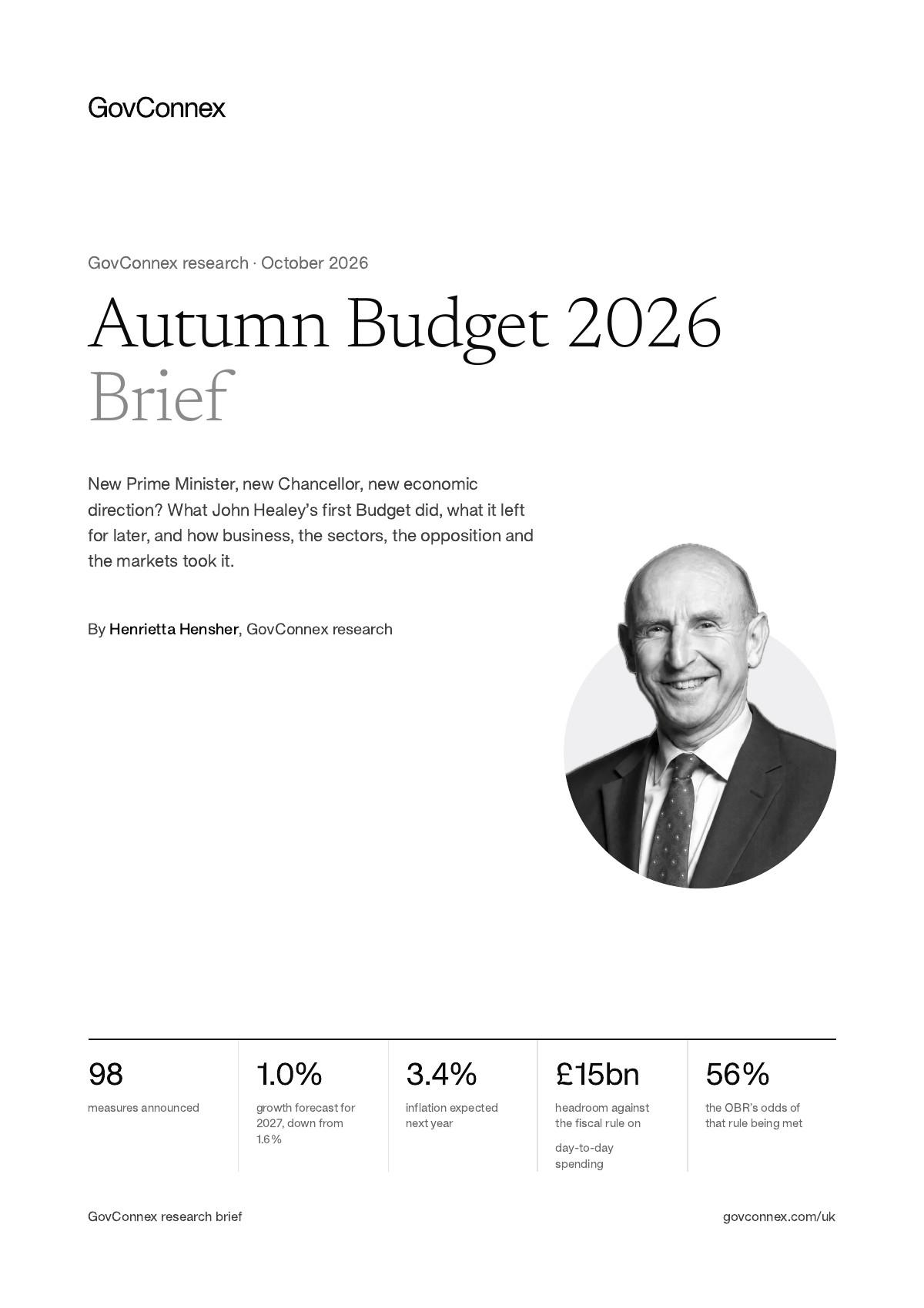
Autumn Budget 2026 Brief
What John Healey’s first Budget did, what it left for the Spending Review, and how it went down
By Henrietta Hensher
John Healey announced 98 measures in his first Budget, and the reaction was simple: “was that it?” Not because nothing was announced, but because so much of it was small, temporary or deferred. The OBR judged the measures “relatively small in fiscal terms” and not significant enough to change its growth forecast.
There was help with energy bills, business rates relief for the high street, cheaper electricity for manufacturers, a new Founders’ Relief and an equity-loan scheme for first-time buyers. Tax rose quietly, on property and savings income and on banks, while the headline rates of income tax, National Insurance and VAT stayed where they were.
The biggest questions were left open: how the welfare bill comes down, how defence reaches 3% of GDP in 2030, what happens to social care, and how unprotected departments cope. The 2027 Spending Review is now being asked to carry an unusual amount of weight.
The full report · 19 pages, with every chart.
Get the full reportWhat we found
1. The OBR judged the Budget too small to change its growth forecast
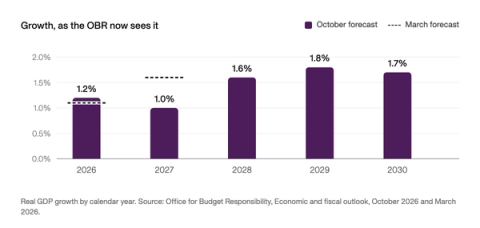
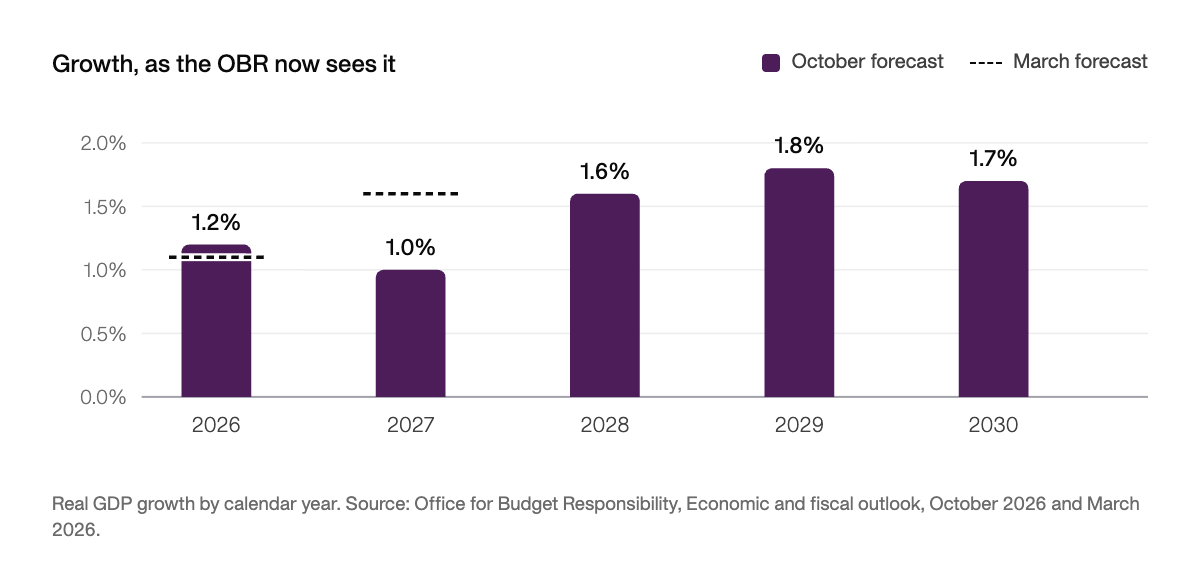
Growth in 2027 is now forecast at just 1.0%, cut from 1.6% in March, with inflation averaging 3.4% next year. Healey’s headroom against his current-budget rule is only £15bn, and the OBR puts the chance of meeting it at 56%.
 Open the full-size chart
2. The biggest decisions were pushed to the 2027 Spending Review
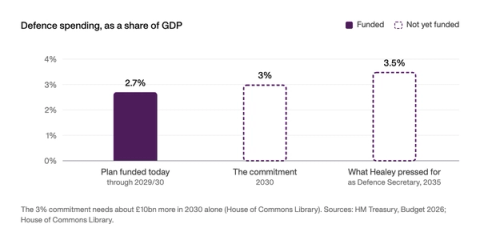
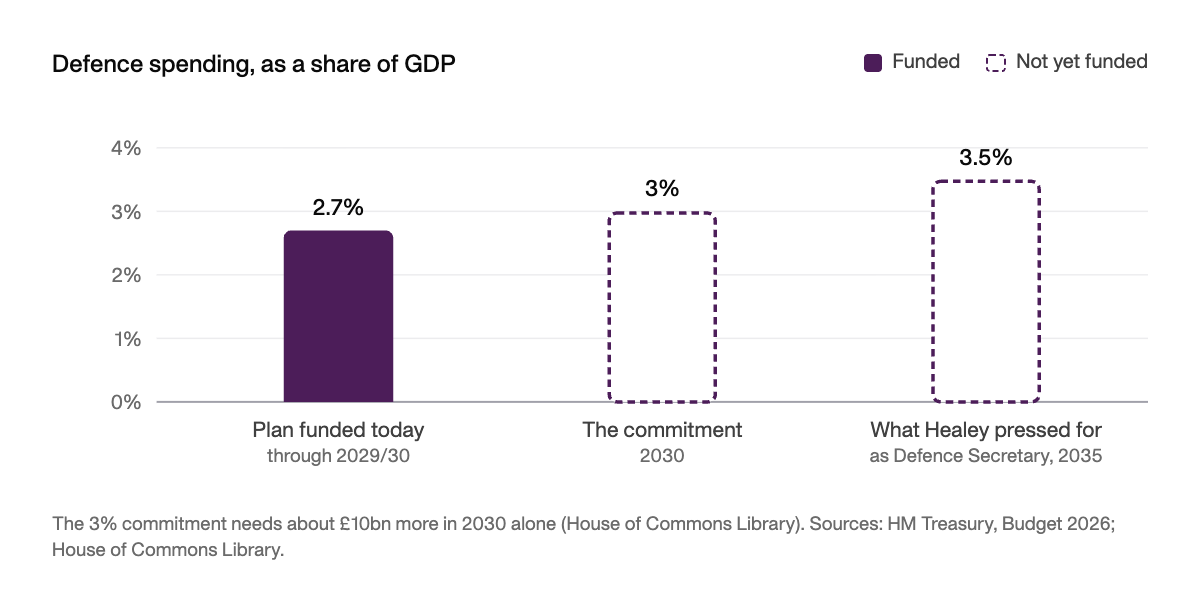
The Budget filled the £4.7bn gap in the existing Defence Investment Plan but not the roughly £10bn more needed to reach 3% of GDP in 2030. Welfare reform waits for the Milburn and Timms reports, social care for Baroness Casey’s commission, and unprotected departments could face real-terms cuts of around 2.6% a year.
 Open the full-size chart
3. Tax rose quietly, through property, savings and the banks
From April 2027 income from property and savings outside tax-free wrappers is taxed two points more, and the Bank Corporation Tax Surcharge rises from 3% to 6% for 15 months. The cash ISA cut was dropped, founders get a 10% CGT rate on up to £10m of gains, and the threshold freeze keeps raising money through fiscal drag.
4. The markets were calm; the sectors were not
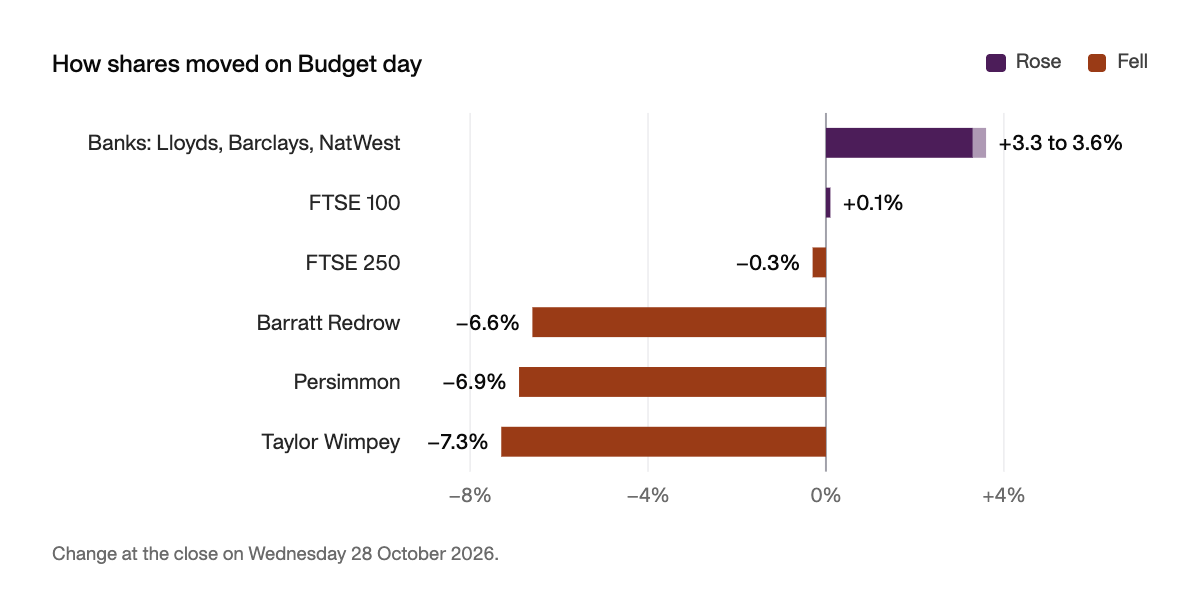
Gilt yields fell and banks rose 3.3–3.6% on a smaller surcharge than feared, while housebuilders fell around 6%. The CBI said the Budget did not meet the scale of the Government’s ambition, the NFU called it a “massive missed opportunity”, and the Welsh Government said it was not a Budget that delivered for Wales.
 Open the full-size chart
What’s in the report
- The OBR’s verdict p. 3
- Tax p. 4
- Cost of living p. 5
- Wages, unemployment and the young p. 6
- Welfare p. 6
- Business, hospitality and growth p. 8
- Defence p. 9
- Energy p. 10
- Health and social care p. 11
- Education, skills and NEETs p. 12
- Agriculture p. 13
- Housing p. 13
- Rail and infrastructure p. 14
- The devolved nations p. 15
- The reaction p. 16
- A Budget for an early election? p. 17
- So, was that it? p. 18
How we counted
Written the day after the Budget from the Treasury’s Budget documents and the OBR’s Economic and fiscal outlook, analysis by the IFS, the Resolution Foundation and the House of Commons Library, and what business groups, charities, the devolved governments and the parties said on the day and the morning after, with market prices at the close on Budget day and the next morning.
Thanks. Your report is downloading.